Low Fade vs. Mid Fade vs. High Fade: What's the Difference?
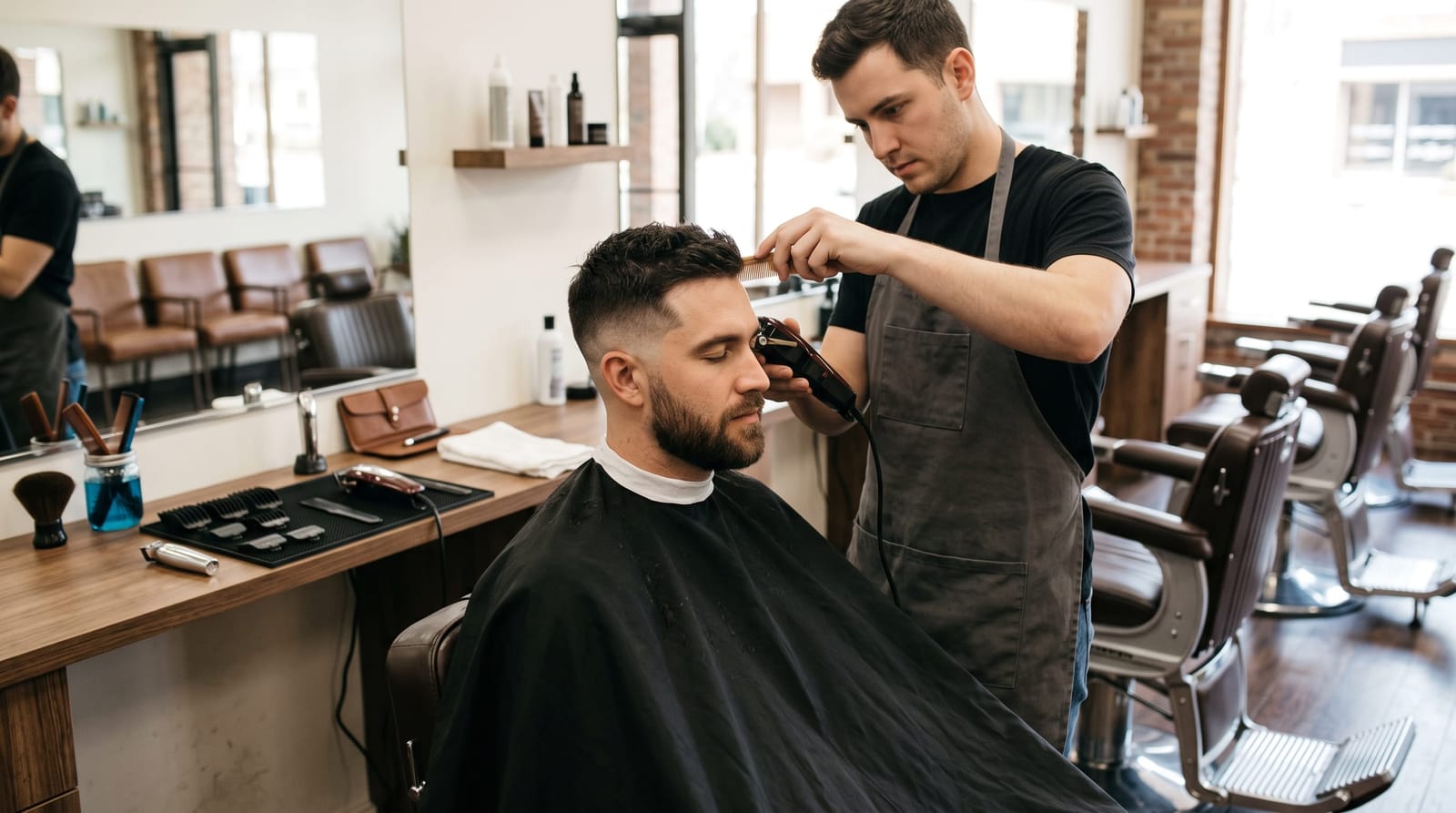
When you walk into a barbershop and ask for a fade, the first question your barber will likely ask is: how high do you want it? That single decision shapes the entire look of your haircut. The three main fade positions, low, mid, and high, each sit at a different point on the head, create a different amount of contrast, and suit different face shapes and lifestyles. This comparison guide breaks down exactly what sets them apart so you can walk in knowing what you want.
The Three Fade Positions: Where Each One Sits
Understanding a fade starts with understanding geometry. Your barber is working with roughly 3-4 inches of real estate on the sides of your head, and where the gradient begins determines which fade you're getting.
- Low fade: The gradient starts just above the ear and the natural hairline, typically within the bottom 1 inch of the sides. It's a subtle, tight taper that keeps most of the hair's length intact.
- Mid fade: The gradient begins at roughly the midpoint between the ear and the temple: about halfway up the sides. This is the most commonly requested fade in most barbershops.
- High fade: The gradient starts near or at the temple, about 2-3 inches above the ear. This leaves very little hair on the sides and creates a strong, dramatic contrast between the shaved area and the top.
Think of it as a spectrum from subtle to bold. The low fade removes the least amount of hair, the high fade removes the most, and the mid fade sits squarely in between. According to barbers who work with skin fades daily, the mid fade accounts for roughly 40-50% of all fade requests, making it the industry's workhorse cut, but that doesn't mean it's right for everyone.
Low Fade: Clean, Classic, and Conservative
The low fade is the most understated of the three. Because the taper begins so close to the natural hairline near the ear, there's minimal skin exposure and a gentle blend that looks polished without screaming "fresh cut" to everyone in the room. It's the go-to choice for professional environments or guys who want a sharp look that still reads as traditional.
Best face shapes for a low fade
The low fade works especially well for men with oblong or longer face shapes. By keeping more hair on the sides, it adds visual width and balances out a longer face. Men with diamond-shaped faces also benefit from the low fade's ability to preserve fullness around the ear area.
Popular style pairings
- Low fade + side part (classic barbershop look)
- Low fade + slick back (adds sophistication)
- Low fade + natural waves or curls (keeps curl volume while cleaning up edges)
One practical advantage of the low fade: it tends to grow out more gracefully. Because the gradient is compressed into a small area, it can look sharp for up to 3-4 weeks before needing a touch-up. If maintenance frequency matters to you, how long does a skin fade last is worth reading before you book your next appointment.
Mid Fade: The Versatile Middle Ground
The mid fade is the most requested fade style for good reason: it delivers noticeable contrast without going to extremes. Starting at the temple area, the gradient covers the middle third of the sides and creates a clean, modern silhouette that works across a wide range of hair types, textures, and personal styles.
Best face shapes for a mid fade
The mid fade is genuinely versatile, but it's particularly flattering on oval and square face shapes. Oval faces can handle almost any fade position, but the mid fade adds just enough contrast to define the jawline without exaggerating it. Square faces benefit because the mid fade softens the sides slightly while maintaining structure at the top.
Popular style pairings
- Mid fade + textured quiff (a top-seller in modern barbershops)
- Mid fade + crew cut (timeless and low-maintenance)
- Mid fade + faux hawk (adds height without going extreme)
- Mid fade + afro or coils (defines the shape beautifully)
Because it hits that sweet spot between subtle and dramatic, the mid fade is often the first recommendation a skilled barber makes to someone who isn't sure what they want. It photographs well, it transitions easily between casual and professional settings, and it suits a broad range of ages, from teens to men in their 50s.
High Fade: Bold, High-Contrast, and Modern
The high fade is the most dramatic of the three positions. Starting near or at the temple, sometimes even higher, it exposes a significant amount of skin on the sides and creates a stark, eye-catching contrast between the nearly bare sides and the styled top. This is the fade you see on athletes, on social media, and on anyone who wants their haircut to make a statement.
Best face shapes for a high fade
The high fade works best on round and square face shapes. Because it removes so much hair from the sides, it creates a strong vertical line that elongates the face. Men with round faces especially benefit from this lengthening effect. However, men with already-long or oblong faces may find that a high fade makes their face appear even longer: a low or mid fade is typically a better match in that case.
Popular style pairings
- High fade + textured top (the most popular combination in 2024)
- High fade + hard part (ultra-defined, sharp lines)
- High fade + dreads or twists (frames the style dramatically)
- High fade + buzz top (clean, athletic look)
One thing to keep in mind: a high fade grows out faster in terms of visible change. Because so much skin is exposed, even 1-2 weeks of growth can soften the contrast noticeably. Most guys rocking a high fade visit their barber every 2-3 weeks to keep it sharp.
Side-by-Side Comparison: Choosing the Right Fade for You
Still deciding? Use this quick reference to match your situation to the right fade position:
- Professional or conservative setting? → Low fade
- First time getting a fade and unsure? → Mid fade
- Round or square face looking for length? → High fade
- Long or oblong face? → Low or mid fade
- Want to go longer between barber visits? → Low fade
- Want maximum contrast and visual impact? → High fade
- Pairing with textured, voluminous hair on top? → Mid or high fade
- Prefer a classic, timeless look? → Low fade
If you're heading to the barbershop for the first time and aren't sure how to describe what you want, being able to name the fade position, low, mid, or high, gives your barber an immediate, clear starting point. Knowing what to tell your barber when getting a skin fade for the first time can save you from a lot of guesswork in the chair.
Frequently Asked Questions
Which fade is easiest to maintain at home between visits?
The low fade is generally the easiest to maintain because the gradient is compact and the grow-out is gradual. A high fade shows new growth much more quickly because the contrast between skin and hair is so stark. If you're aiming to stretch time between barbershop visits, start with a low fade.
Can I switch from a low fade to a high fade in one visit?
Yes. Because a high fade removes more hair than a low fade, your barber can absolutely take you from low to high in one sitting. Going the other direction, from high to low, requires waiting for the sides to grow back out. Your barber can advise you on the best transition approach based on your current hair length.
Does the low fade vs. mid fade vs. high fade choice affect how long the haircut takes?
Not significantly. The time difference between fade positions is usually just a few minutes. The bigger time factor is the overall haircut complexity, whether you're adding a hard part, a design, or detailed beard work. A standard skin fade in any position typically takes 30-45 minutes at a quality barbershop.
What's the difference between a skin fade and a regular fade?
A regular fade blends hair down to a very short length (often a number 1 or 0.5 guard), while a skin fade, also called a bald fade, takes the gradient all the way down to bare skin. A skin fade produces the highest contrast and the cleanest finish. All three positions (low, mid, high) can be done as skin fades or regular fades.
Choosing Your Fade with Confidence
The difference between a low fade, mid fade, and high fade comes down to three things: where the gradient starts, how much contrast it creates, and how it interacts with your face shape. Low fades are subtle and classic, mid fades are versatile and modern, and high fades are bold and high-impact. Any of the three can be executed as a clean skin fade haircut at a Florida barbershop that specializes in precision cuts. Now that you know the difference, you can walk into your next appointment with a clear picture of what you want, and walk out looking exactly like it.